
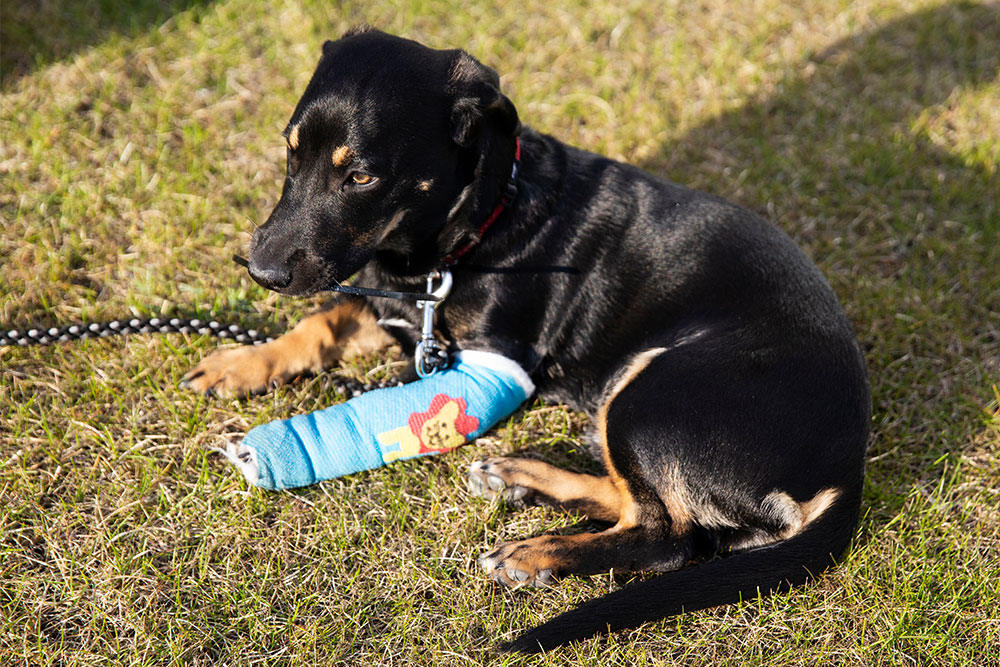
The hiking injuries that send Pennsylvania dogs to the vet most often are cut and torn paw pads on sharp rock, muscle and ligament strains from steep, uneven terrain, tick and snake bites from the underbrush, heat and dehydration on humid climbs, and blunt trauma from falls near waterfalls or ledges. Wildlife encounters with porcupines and skunks add another layer, and toxins like water from stagnant pools or wild mushrooms can turn a great day sour by nightfall. Dogs are wired to hide pain on the trail, so the limp, the swelling, or the lethargy usually shows up back at the car, at dinner, or in the middle of the night. That is the window that matters, because a paw laceration, a suspected snake bite, or a dog who suddenly cannot settle after a hike genuinely needs same-day care.
Creature Comforts Veterinary Service has 24/7 emergency care in Saylorsburg, and we keep a fully staffed hospital running around the clock for exactly the moment a hike goes sideways at dusk on a Sunday. Our in-house lab, digital X-ray, and ultrasound let us work up a limping dog, a suspected snake bite, or a pet who came home lethargic without waiting on an outside facility to open in the morning. Because we sit at the edge of the Poconos, we know the injury patterns that come off Pennsylvania ridgelines. If your dog is limping, bleeding, or just not right after a hike, call our team and we will be ready when you pull in.
Quick Takeaways Before You Lace Up
- Paws and orthopedic injuries top the list on Pennsylvania’s rocky, rugged terrain, so a careful body-and-foot check at the car catches most problems before they get worse.
- Weather here swings fast between summer heat, winter cold, and sudden storms, and planning your window around the forecast prevents most temperature emergencies.
- Ticks and venomous snakes both warrant real respect, and year-round prevention plus a leashed, close dog handles the bulk of that risk.
- Dogs hide trail pain on purpose, so the limp or the lethargy you see back home is your cue to reach out to us for urgent care rather than wait it out.
Where Do Trail Injuries Actually Come From?
Hiking with your dog is one of life’s simplest pleasures, but those adventures can go sideways quickly. Most trail injuries we treat fall into a handful of buckets: paw and orthopedic damage, heat or cold stress, bites and stings, and toxin exposure. Nearly all of them need same-day attention rather than a routine slot, because the problems that follow a hike tend to move quickly once they show up.
Here is the part that trips up a lot of hikers. Dogs do not tap out when something hurts. A retriever will keep charging up the ridge on a torn nail, and a spaniel will splash through a stream on a strained shoulder without a whimper. Because dogs rarely quit when they hurt, learning the signs a dog is in pain, like a lowered head, hard panting, or licking an area obsessively, helps you catch a problem on the trail instead of at home that night.
Matching each hazard to its likely injury and the right response makes the call easier when you are three miles in and something looks off. The throughline for every row below is the same: stop early and assess. A two-minute check beats a five-mile limp back to the car.
| Hazard | Likely injury | What to do |
| Sharp rock, hot pavement | Pad cuts, burns, torn nails | Stop, check paws, bootie or bandage, head in if bleeding persists |
| Steep, slick, or icy footing | Strains, sprains, cruciate tears, fractures | Rest, gentle stabilizing, exam rather than a trailside splint |
| Heat and humidity | Overheating, heat stroke | Shade, cool water, active cooling, same-day care if wobbly |
| Ticks and biting insects | Tick-borne disease, stings, allergic reactions | Prevention, post-hike check, same-day care for facial swelling |
| Snakes and large wildlife | Venomous bites, trauma | Keep dog still, carry out, call ahead |
| Streams and stagnant pools | Giardia, toxic algae, drowning risk | Discourage drinking, avoid algae blooms, dry ears |
Which Pennsylvania Trail Plants Can Poison or Irritate Your Dog?
Pennsylvania trails hold two kinds of dangerous plants: contact irritants like poison ivy, poison oak, poison sumac, and poison hemlock, and toxic species that harm dogs who eat them, including white baneberry, water hemlock, horse nettle, cow parsnip, and pokeweed. A quick rinse helps after skin contact; eating an unknown plant warrants a call for guidance.
Several toxic native plants grow right at trail edge, where a dog snuffling through the brush can browse a mouthful before you notice. If your dog eats an unfamiliar plant, photograph and bag a piece and call Pet Poison Control so you know whether to head in or watch and wait.
What Wildlife Can Hurt Your Dog Out There?
Pennsylvania trails put dogs in range of plenty of wildlife that can hurt them: bears, bobcats, coyotes, raccoons, porcupines, skunks, and elk. Also worth respecting: Pennsylvania trails are shared with hunters during open seasons. Know the hunting season dates, wear blaze orange for both of you, and keep your dog leashed and close during those weeks.
Elk sightings pick up in some areas, especially in fall. Give elk in particular plenty of room, since they are far bigger and stronger than they look. A wild animal encounter can escalate fast, so holding your ground and backing away calmly keeps a tense standoff from turning into a fight. Your dog often reads trouble before you do, so watch their body language for the early tip-off that something is out there you have not spotted yet.
A face full of porcupine quills is painful and often requires anesthesia and surgical care to remove. Bites from a tangle with a raccoon or coyote can also require surgical repair and warrant a rabies booster. And no one wants to share a tent with a dog who has been skunked. The safest plan is a leashed dog kept close, reading the situation early, and giving animals a wide berth.
Venomous Snakes and Stinging Insects on the Trail
Venomous timber rattlesnakes and copperheads, ticks, stinging insects, and venomous spiders all share Pennsylvania trails. A venomous snakebite is a carry-to-the-car emergency where the dog should be kept as still as possible rather than walked out. If you suspect a bite, call ahead so our team can have everything ready the moment you arrive.
Then there are the small biters and stingers: ticks that transmit Lyme and other diseases, mosquitoes, yellow jackets, bald-faced hornets, and black widow spiders. Multiple stings, facial swelling, hives, or trouble breathing all need same-day care. Year-round tick prevention paired with a thorough check of the ears, groin, and toes after every hike is your best defense against Lyme and the other diseases ticks carry.
Reading the Sky: Heat, Cold, and the Storms That Roll In
Pennsylvania throws wild weather and both temperature extremes at your dog. Summer heat and humidity can tip into heat stroke fast, while cold, wind, and wet in the colder months risk hypothermia, especially for small, thin-coated, young, or senior dogs. Reading the forecast and picking your window is half the battle.
On the hot side. Summer heat safety comes down to hiking in the cooler hours, watching for heavy panting and stumbling, and turning back before overheating tips into heat stroke. Get your dog into shade, offer water, and start cooling with cool (not ice-cold) water on the belly and paws if they seem overheated
On the cold side. Cold weather safety means watching for shivering, slowing down, or a dog who wants to stop and curl up. Small and thin-coated dogs benefit from a coat, and wet fur in a cold wind is a fast track to trouble.
Weather here also turns on a dime. Thunderstorms, lightning, and even tornadoes are part of the deal. After heavy rain the flash flood risk near waterfalls, streams, and low-lying trails climbs fast, and no photo is worth crossing water that is rising or already moving. Dry conditions bring the opposite problem, so scan for wildfire activity before you head out and leave promptly if you see or smell smoke.
What Do Miles on the Trail Do to Your Dog’s Paws?
Paws take the most punishment on a Pennsylvania trail, and our terrain is unforgiving. Sharp rock, hot pavement, and burrowing seed heads cause most paw injuries, and a small cut is easy to miss mid-hike, so prep before and check after every outing.
Those seed heads are foxtails, which burrow between the toes and migrate inward through the skin if they go unnoticed. An embedded grass awn is easy to overlook when your dog is having the time of their life and is often ignored until it becomes an abscess days later.
How Do You Prep a Dog’s Paws Before the Hike?
A few steps protect paws before you go, and trimming nails short enough that they do not catch on rock is one of the simplest.
- Test the surface: press the back of your hand to the rock or pavement for seven seconds; if it is too hot for you, it is too hot for pads, and that quick heat check takes seconds.
- Condition soft pads: build up to rough terrain gradually over several outings rather than tackling a rocky ridgeline on day one.
- Use booties on rough or hot ground: a good set of dog boots shields pads from sharp rock and scorching surfaces on the worst stretches. They also protect against foxtails.
What Should You Check on Paws After the Hike?
Run through a quick paw check at the car every time, looking at nails, pads, and the skin between the toes and webbing, where debris loves to hide.
- Nails: a cracked or broken nail that is bleeding or dangling needs attention, not a wait-and-see.
- Pads: surface scrapes usually heal at home, but a deep cut, a flap of pad, or anything still bleeding warrants a visit.
- Between the toes: feel for embedded thorns, gravel, or awns; anything you cannot easily lift out, or a spot that is swollen and sore, means come in.
What Do You Do About a Paw Injury on the Trail?
For a bleeding nail, apply steady pressure and a dab of styptic powder, which usually calms it down. A deep pad cut that keeps bleeding through a wrap needs same-day care rather than a bandage and hope. Deep lacerations often need cleaning, and sometimes stitches.
Can a Slip on Wet Rock or a Swim Gone Wrong Hurt Your Dog?
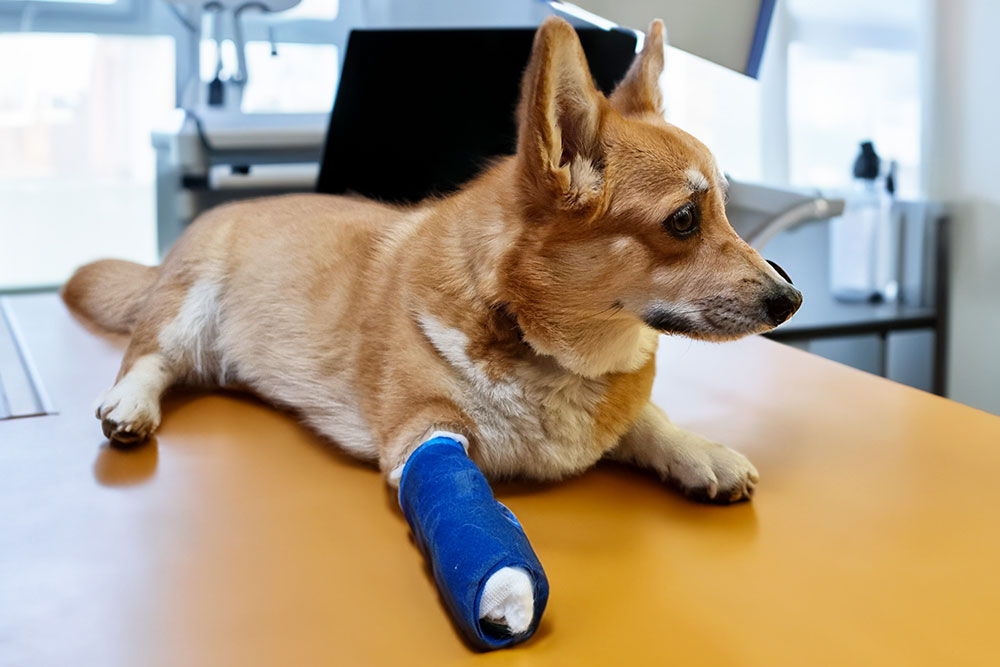
One bad step on slick rock can leave your dog with strains, sprains, cruciate ligament tears, or broken bones, and lakes and streams add giardia, toxic algae, fast current, and ear infections. For a suspected orthopedic injury, the right move is rest, gentle stabilization, and an exam rather than a trailside splint.
The hard part is telling simple soreness from real damage, because a cruciate ligament tear can hide behind what looks like a minor limp, which is why lameness that lingers past a couple days of rest deserves an exam. A broken bone announces itself more loudly, with sudden non-weight-bearing lameness, swelling, or a leg held at an odd angle; keep your dog still, support the limb if you can, and transport carefully. Our in-house X-rays let us see exactly what is going on inside the limb.
Water near trails brings its own hazards:
- Waterborne bugs: discourage your dog from drinking out of stagnant water and puddles, since that natural water can carry giardia and the bacteria behind leptospirosis.
- Toxic algae: blue-green algae can be deadly, so check current algae bloom advisories and steer clear of scummy water.
- Fast or deep water: strong current is the real danger, so keeping dogs out of it is the heart of water safety.
- Swimming smarts: even confident swimmers get in over their heads, which is why swimming safety means knowing when a river or lake is simply too much for your dog.
- Wet ears: drying the ears after a swim heads off the ear infections that love a damp canal.
Prep That Keeps Your Dog Out of Our Waiting Room
The dogs we see least after hikes belong to families who did the boring prep. Build fitness gradually, pack for the hazards you might meet, follow local rules, and watch the forecast. It sorts into a few buckets.
- Gear: pack water, a basic kit, and a well-fitted harness for control on rough footing.
- Prep: condition your dog over a few outings, and get current on parasite prevention and pre-season wellness care so they are trail-ready before the season starts.
- Skills: solid recall on a long line is the single most useful thing to practice before a rugged hike.
- First aid: a little pet first aid know-how turns a scary trailside moment into a manageable one.
- Home once-overs: learning a quick at-home checkup makes a post-hike body scan second nature.
Trail Injury Questions Pennsylvania Dog Owners Ask Us
What temperatures are too hot or too cold to hike with my dog?
There is no single cutoff, but once the air hits the mid-80s Fahrenheit with humidity, the risk of overheating climbs sharply, especially for flat-faced, thick-coated, or senior dogs. On the cold end, temperatures below freezing with wind or wet start to threaten small, thin-coated, young, and senior dogs.
Always test the ground with the back of your hand, hike in the cooler hours, and let your dog’s panting and pace guide you more than the thermometer alone.
My dog is limping after a rocky hike. Should they be seen?
A dog limping after a rocky hike often does need to be seen. A mild limp that resolves within a day of rest may just be soreness, but limping that persists past a couple of days, worsens, or comes with swelling deserves an exam. A partial cruciate tear can masquerade as a simple sprain and will not heal on its own. Because dogs hide pain, a lingering limp is usually telling you more than it looks like, so it is safer to have us take a look than to wait and hope it fades.
What do I do if my dog may have been bitten by a venomous snake?
Treat it as an emergency. Keep your dog as calm and still as possible, and carry them to the car rather than letting them walk it out, since movement speeds venom through the body. Do not apply a tourniquet, ice, or try to suck out venom. Call ahead so we can prepare, then come straight in. Timber rattlesnake and copperhead bites can cause serious swelling and tissue damage, and prompt care makes a real difference in the outcome.
Sending You Down the Trail With a Plan
A safe trail day in Pennsylvania comes from the unglamorous stuff: prepping paws, respecting the footing on wet rock, planning around the weather, and staying ahead of ticks and snakes. Most trail injuries are preventable, and the rest are best handled by knowing where to go before you need it.
Remember that your dog will hide pain until you get home, so give them a good once-over after every hike. If a hike goes sideways, reach out for same-day triage and we will get your dog seen fast with 24/7 emergency veterinary care in Saylorsburg available. Go have a great hike, and we will be here if you need us.





Leave A Comment