

The two main kinds of mange behave so differently that whether the rest of your household can catch it depends entirely on which mite your pet is carrying. Demodex mites live deep in the hair follicles, rarely spread between animals, and the species dogs and cats carry pose no risk to people. Sarcoptic mites burrow through the skin, jump from pet to pet with ease, and can leave an itchy rash on human arms and ankles. Cats face their own mite species on top of that, which is one more reason a patchy, crusty, or itchy coat deserves a proper diagnosis instead of a guess. The mite’s identity determines the treatment, how long that treatment runs, and whether anyone else in the house needs protecting, so pinning it down early saves weeks of the wrong approach.
Itchy, patchy-coated dogs and cats find their way to Creature Comforts Veterinary Service in Saylorsburg all year, and mange sits on our suspect list more often than most families expect. Our extensive in-house laboratory lets us examine skin scrapings under the microscope to identify the mite, and bloodwork can follow when adult-onset Demodex hints at something deeper going on. Once we know which mite we are treating, we walk you through the treatment plan and the recheck schedule together, since clearing mites takes steady follow-through over weeks rather than days. If your pet is scratching, losing hair, or developing crusty patches, request an appointment and we will start narrowing down the cause.
Start Here: Which Mite Is Which
- Demodex mites live on nearly every dog and only cause trouble when the immune system dips, and this kind of mange doesn’t spread to other pets or to people.
- Sarcoptic mange in dogs and the feline mite Notoedres cati spread fast and can give people a temporary itchy rash, so they call for quick treatment and treating every animal in the home.
- Plenty of skin problems that look like mange are actually fleas, allergies, ringworm, or an underlying issue such as thyroid disease or Cushing’s, which is why a scraping and a full workup come before treatment.
- Most mange clears with prescription medication, with sarcoptic cases usually resolving in about four to six weeks and demodex often taking two to four months of rechecks.
Why Does It Matter Which Mange My Pet Has?
Mange isn’t one disease but several different mite infestations, and the specific mite behind the itching decides which medication works and whether other pets in the home are at risk. Sometimes the skin is the messenger rather than the real problem: an adult pet’s sudden flare can point to something deeper wearing the immune system down. In-house testing lets our team look at a skin scraping while you wait, so you leave with a name for what you’re treating instead of a hunch.
What Are the Two Kinds of Mange in Dogs?
Dogs deal with two very different mange mites: demodectic mange comes from mites nearly every dog already carries and isn’t contagious, while sarcoptic mange comes from mites caught off another animal and spreads fast.
| What to compare | Demodectic mange | Sarcoptic mange |
| Where the mites come from | Already present in the follicles; overgrow when immunity dips | Caught from another infected animal |
| Contagious to other pets | No | Yes, very |
| Catchable by people | No | Yes, but temporary |
| Itch level | Mild to moderate unless the skin gets infected | Intense and relentless |
| Usual recovery window | Two to four months for generalized cases | About four to six weeks |
Demodectic Mange in Dogs
Demodectic mange develops when the mites already living in the hair follicles multiply out of control because the immune system is too immature or too suppressed to hold them back. In young puppies this often shows up as a small, localized bald patch or two that clears on its own as they grow. Generalized demodex covers larger areas, needs prescription treatment, and is worth investigating for whatever let it spread so far. When a healthy adult dog suddenly breaks out, that’s a signal to check for an underlying problem lowering their defenses.
Sarcoptic Mange in Dogs
Sarcoptic mange comes from mites that tunnel into the skin and set off frantic, round-the-clock scratching within days of contact with an infected animal. It spreads through direct contact, so one afternoon at a dog park, a boarding kennel, or a crowded Saylorsburg trailhead on a summer weekend can be enough. Because these mites are zoonotic, they can move onto human skin and leave an itchy, temporary rash until the pet is treated. A dog carrying it should stay away from other animals during treatment.
What Mites Affect Cats?
Mites in cats look different from the canine versions, and feline demodex can hint at an immune problem underneath.
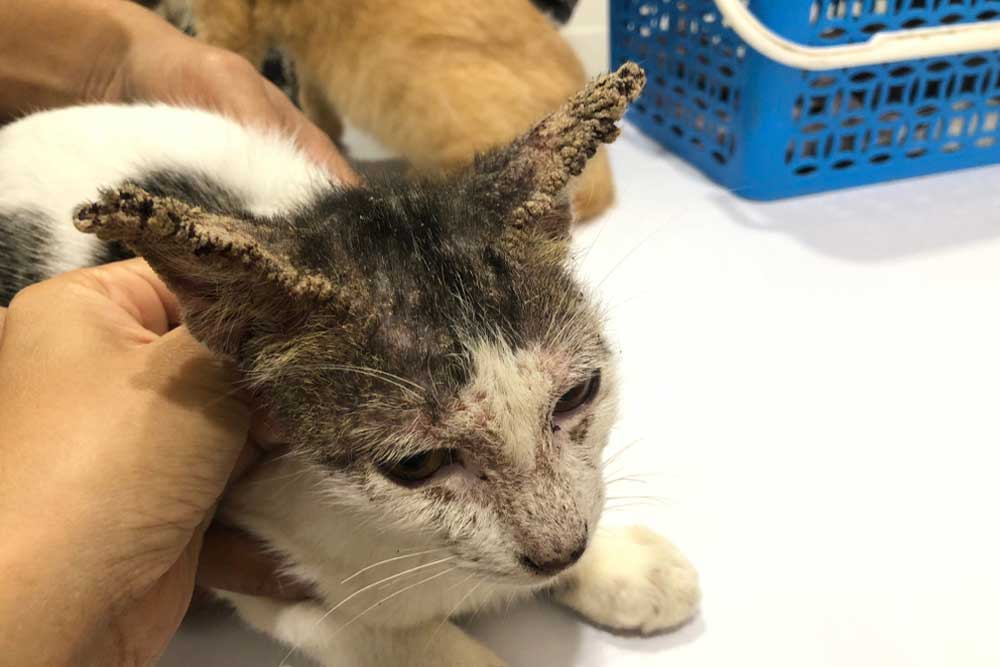
Ear mites are far and away the most common, especially in kittens and cats from crowded settings, and they leave a dark, crumbly debris that looks a bit like coffee grounds, along with plenty of head-shaking and ear-scratching. They pass between cats through everyday contact, so a household with one itchy kitten usually needs every cat checked. Notoedric mange is less common but more serious: it’s highly contagious between cats and produces thick, crusted skin that starts at the ear margins and spreads across the face.
What Else Looks Like Mange?
Patchy hair loss has a long list of causes beyond mites, which is why treating for mange without confirming it can waste weeks while the real problem keeps going.
- Flea allergy dermatitis is a reaction to proteins in flea saliva, and a single bite can trigger days of intense itching even when no live fleas are visible. Dogs tend to chew at the rump and tail base while cats break out in tiny scabs around the head and neck, and obsessive grooming often hides the culprits entirely.
- Atopic dermatitis is an allergic response to everyday environmental triggers like pollen and dust, and once a pet scratches enough to develop a skin infection it can look almost identical to mange.
- Despite the name, ringworm is a fungus that leaves circular, scaly bald patches, spreads to people, and can live on a cat that shows no outward signs at all.
- Bacterial and yeast infections often ride along with mange and allergies, but either one can flare on its own and needs its own treatment.
Could an Underlying Health Problem Be Behind It?
When an adult pet suddenly develops demodex, or skin problems keep returning no matter how well you treat them, something deeper is often suppressing immune function or disrupting the skin itself.
Hypothyroidism
Hypothyroidism slows a middle-aged dog’s metabolism and shows up in the coat as symmetrical hair loss, a dull texture, and skin infections that keep coming back. Weight gain and low energy usually travel with it, and the skin changes are easy to mistake for chronic allergies or mange.
Cushing’s Disease
Cushing’s disease floods the body with cortisol, thinning the skin and weakening immune defenses to the point that adult-onset demodex can show up as one of its first outward signs. Increased thirst, more frequent urination, a pot-bellied look, and a thinning coat round out the picture.
Other Immune-Suppressing Conditions
Diabetes, cancer, and long-term steroid use all weaken the immune system, and in cats, FIV and FeLV do the same. When a skin condition behaves strangely or refuses to respond to solid treatment, that resistance is itself a clue worth chasing.
How Do We Figure Out What’s Really Going On?
Every workup starts with a full history and a hands-on skin exam, then moves to the tests that separate the look-alikes. Skin scrapings and cytology sort mites from bacterial and yeast infections, a fungal culture rules ringworm in or out, and bloodwork screens for the hormonal problems that hide underneath.
Not every mite turns up on the first slide. Sarcoptic mites burrow so deep that scrapings miss them more often than not, so when the history and the itch pattern point that way, we may recommend a treatment trial and judge by the response. Allergy testing enters the picture when the case looks more like atopic dermatitis than an infestation.
How Is Mange Treated?
Most mange clears with prescription parasite medication, and much of treating mites now overlaps with routine prevention, since several of the same monthly products that guard against fleas and worms also clear mange. Look for the class of drugs known as isoxazolines: Bravecto, NexGard, Credelio, and Simparica are all options and are available in our online pharmacy. Keeping parasite preventatives current year-round is often all it takes to stop sarcoptic and ear mites before they get a foothold, and the earlier an active case is caught, the shorter and simpler treatment tends to be.
Treating Demodectic Mange
Localized demodex in a puppy often just needs monitoring and a little time, since a maturing immune system usually clears it. Starting a monthly parasite preventative for fleas and ticks is a wise idea at this age anyway, with the added benefit of helping clear mites faster. Generalized demodex is a bigger job: it calls for prescription parasiticide continued until several rechecks come back clean, with any secondary infection handled alongside the mites. Because demodex tends to surface when the body is run down, pairing treatment with immune-supporting wellness care gives the skin its best chance of healing for good.
Treating Sarcoptic Mange and Other Contagious Mites
Sarcoptic mange responds quickly to prescription parasiticides, usually given as a series of doses over several weeks. Every pet in the household needs treatment, even the ones who seem perfectly fine, because these mites spread before symptoms ever show. Washing bedding, collars, and blankets in hot water clears the environment so the mites can’t cycle back through the home.
| Situation | Typical approach | Expected timeline
|
| Demodex | Prescription parasiticide plus rechecks | Roughly two to four months for moderate cases |
| Sarcoptic mange | Prescription parasiticide, every pet in the home treated | About four to six weeks |
| Ear mites | Prescription ear or parasite treatment | A few weeks |
Frequently Asked Questions About Mange and Mites
Can My Family Catch Mange From Our Pet?
It depends entirely on the mite. Demodex isn’t contagious to people, so demodectic mange poses no risk to your family. Sarcoptic mange in dogs and Notoedres in cats are a different story: these mites can burrow into human skin and leave an itchy, bumpy rash, most often on the arms, waist, and ankles. The good news is people are a dead-end host, so the rash clears on its own once the pet is treated and the mites are gone from the home.
How Long Before the Itching and Hair Loss Get Better?
That varies by the cause. Sarcoptic mange usually eases within a week or two of starting treatment and resolves in about four to six weeks, while generalized demodex is a longer road, often two to four months. Hair regrows only after the itching and inflammation settle, so a little patience is part of the plan, and quitting early is the most common reason mange comes back.
If Only One Pet Is Scratching, Do the Others Still Need Treatment?
The contagious mites call for treating every animal in the house, not just the itchy one. Sarcoptic and ear mites move between animals long before the itching starts, so a housemate who looks completely fine may already be carrying them. Demodex is the exception, since it isn’t passed pet to pet and only the affected animal needs treatment. If you’re not sure which mite you’re dealing with, a simple skin scraping settles the question.
The Fastest Path to Relief Is the Right Diagnosis
Mange and stubborn skin problems can feel overwhelming, especially when the scratching is keeping the whole house up at night, but nearly all of it is very treatable once the right mite or condition finally has a name.
When the itching, hair loss, or crusty patches can’t wait, schedule an evaluation with the Creature Comforts team in Saylorsburg and we’ll sort out exactly which mite or condition is at work.