

Helping a dog or cat through a seizure is mostly a hands-off job, which is the opposite of what instinct tells you to do. Holding them down and reaching toward the mouth is the fastest way to get bitten by an animal who has no idea you are there. What genuinely helps is clearing furniture out of the way, turning down lights and noise, moving other animals to another room, and glancing at a clock so you know how long the episode actually lasts. That number matters more than almost anything else you will notice: past five minutes, or a second episode within the same day, and it is an emergency, as is any seizure in a pet who has never had one. If you can, record video, because thirty seconds of footage tells a veterinarian more than the best description you could give us.
Creature Comforts Veterinary Service in Saylorsburg is staffed around the clock, so a seizure at two in the morning reaches a veterinarian rather than a recording. Seizures sit on our list of true veterinary emergencies, and letting us know you are on the way means we can have everything ready when you arrive. Our in-house lab and imaging help us look for causes such as organ disease, low blood sugar, or toxin exposure once your pet is settled. If your dog or cat has had a seizure, even a short one that is already over, give us a call so we can get them seen the same day, whatever hour that turns out to be.
What to Do in the First Five Minutes
- Keep your hands away from your pet’s mouth and let the episode run its course; clearing hard furniture, stairs, and other animals out of the way is the help that works.
- Time it, because anything past five minutes, a second seizure in the same day, or a first-ever event means you’re getting in the car.
- Confusion, pacing, ravenous hunger, and temporary blindness afterward can last minutes to hours, and that recovery stretch is normal even though it looks awful.
- Seizures are a symptom, not a diagnosis, so bloodwork and imaging matter just as much as whatever medication comes next.
Which Seizures Mean I Should Get in the Car Right Now?
Any seizure that runs past five minutes, a second episode within 24 hours, and every first-ever seizure all count as a pet emergency, even when your pet gets up and acts normal ten minutes later. What caused the episode matters far more than how it looked.
Five minutes is the line because a seizure that won’t stop on its own, or back-to-back seizures with no real recovery in between, is called status epilepticus. Body temperature climbs, muscles keep firing, and the brain starts to swell. That version needs injectable medication and cooling, not a wait-and-see night at home.
A seizure that follows a summer hike, a closed-up car, or a hot sunroom is more likely heatstroke than epilepsy, and that version is measured in minutes: start cooling with room-temperature water and airflow while you head our way. Never use an ice bath or ice packs, which clamp down surface blood vessels and trap heat where you can’t reach it.
| What you’re seeing | Why it matters | What to do |
|---|---|---|
| A first seizure ever, any length | The cause is unknown, and a few causes move fast | Come in now, even if your pet seems fine |
| More than five minutes | Temperature and brain swelling climb with time | Emergency, call as you leave |
| Two or more in 24 hours | Clusters tend to escalate without treatment | Emergency, call as you leave |
| Follows heat, a spilled product, or a fall | Points to a cause that needs treating tonight | Emergency; bring the packaging if a product is involved |
| A brief seizure in a pet already on medication | Often a drug level or dose that needs adjusting | Call us and we’ll decide together how fast you need to come |
We’re staffed at every hour on that table, so call us on your way in rather than after you park; a few minutes of warning lets our team pull medications and set up the treatment area before the door opens.
What Does a Seizure Look Like in a Dog or Cat?
A seizure is a burst of disorganized electrical activity in the brain. The classic version looks like a sudden collapse, stiff or paddling legs, drooling, chomping, vocalizing, and sometimes loss of bladder or bowel control, and most run under two minutes. Quieter ones exist too: a frozen stare, a rhythmically twitching face, one leg that won’t stop moving. Older cats can also have feline audiogenic reflex seizures, brief repeated muscle jerks set off by high-pitched sounds like crinkling foil, jangling keys, or tapping on a keyboard.
Many pets give a warning first. In the minutes or hours beforehand, some dogs turn clingy or restless and some cats hide or pace, and families who live with epilepsy long enough learn to read that shift and get to a safe room before anything starts.
Not everything that looks like a seizure is one. A dog who drops briefly and pops back up bright and normal may have fainted from a heart rhythm problem. Vestibular disease brings staggering, a head tilt, and flicking eyes while your pet stays fully awake. Sleep twitching, senior tremors, and the honking shudder of a reverse sneeze all get reported to us as seizures, and video is what sorts them apart. Episodes like these are worth raising at annual and biannual wellness exams, where a year-over-year record of weight, behavior, and lab values gives a small change some context.
What Should I Do While My Pet Is Seizing, and What Comes After?
Your job during the event is small and mostly physical: note the time, dim the lights, slide hard furniture and other animals away, and keep your hands clear of the head. Talking in a low voice is fine even though your pet won’t remember it, and a dark, quiet room is the one lever you have while you wait.
Cats tend to rest high up, so seizures in cats often start on a windowsill, cat tree, or the back of the couch, which makes clearing the floor below the very first move so a fall does not add an injury to the episode.
| Do this | Not this |
|---|---|
| Note the start time on a clock or your phone | Guess afterward; a minute of this feels like ten |
| Slide a folded towel near the head without pinning it | Hold your pet down, restrain the legs, or wrap them tightly |
| Clear furniture, block the stairs, shut other pets out | Move your pet at all, unless they’re near stairs, water, or a road |
| Film 20 to 30 seconds if a second person is free | Skip the video because filming feels heartless |
| Turn off the TV, dim the lights, keep voices low | Crowd in, shout their name, or clap to snap them out of it |
| Keep hands entirely away from the mouth | Reach for the tongue or wedge anything between the teeth |
The postictal phase is the recovery window after the seizure, and it can run anywhere from a few minutes to most of a day. Pets pace in circles, bump into walls, seem briefly blind, cry out, drink like they’ve crossed a desert, act starving, cling to you, or hide under the bed. A few get snappy with people they adore, which is disorientation talking and not a personality change.
Keep the room dim and boring while it passes, and block stairs and slick floors until the legs work properly again. Offer a little water only once your pet is steady on their feet and swallowing normally, since a wobbly pet can inhale it, and hold off on food for the same reason. Never give human seizure or pain medication, and do not induce vomiting even when you’re sure a toxin is involved, unless we or a poison control veterinarian tell you to.
There’s no wrong hour to call while you’re sitting on the floor with your dog waiting this out. Once your pet is steady and the immediate scare is behind you, a visit is where we start on the question of why it happened at all.
What Causes Seizures in Dogs and Cats?
Seizures are a symptom with a long list of possible sources, and they sort into three buckets: a problem inside the brain, a problem elsewhere in the body that reaches the brain, and something toxic. Age narrows the list fast, since a two-year-old Lab and a thirteen-year-old cat rarely land in the same bucket.
- Epilepsy: Idiopathic epilepsy in dogs is the most common reason a healthy young dog starts having seizures, usually beginning between six months and six years of age, with a normal exam and normal bloodwork in between episodes. Epilepsy in cats is less common than in dogs and more often traces back to something identifiable in the brain, which is why a cat’s first episode gets a closer diagnostic look rather than a wait-and-see plan.
- Structural brain disease: Masses, strokes, head trauma, congenital malformations, and inflammation of the brain tissue itself all irritate the neurons around them. These usually leave fingerprints between episodes, such as a persistent head tilt, circling in one direction, or a pet who suddenly can’t find their food bowl.
- Organ and metabolic disease: When the liver stops clearing ammonia out of the bloodstream, liver disease can leave a dog disoriented, circling, pressing their head into a wall, or seizing outright, and the signs are often worst in the hour after a meal. Low blood sugar, advanced kidney failure, a thyroid swing, and electrolyte crashes all do the same job from outside the skull.
- Toxins: For cats, toxin exposure most often means a permethrin flea product meant for a dog, with household chemicals and certain plants close behind, so bring the packaging with you if a seizure follows any recent product use. Dogs repeat a shorter list: xylitol, dark chocolate, marijuana, moldy compost, snail bait, rodenticides, and a spilled bottle of somebody’s antidepressant. Pet Poison Helpline (855-764-7661) can advise while you drive.
- Puppies and kittens: Blood sugar crashes hard in a tiny puppy or kitten who skips a meal or gets chilled, and the first sign is often wobbling that tips into a seizure. A liver shunt, meaning blood that bypasses the liver instead of being filtered by it, and infections such as distemper or a heavy parasite load round out the usual suspects in the very young.
Almost none of that is visible from across the room, which is why in-house bloodwork and urinalysis come first for most pets: they settle the body-wide causes before anyone starts talking about the brain.
How Do Veterinarians Figure Out Why It Happened?
The workup starts with your story, because the pattern narrows the list before a stethoscope comes out: your pet’s age, the time of day, what they’d been doing beforehand, how long it lasted, and how long the fog took to lift. From there we build outward with an exam, lab work, and imaging when the picture points inside the skull.
Bring the video too. The question it settles fastest is the one that matters most, which is whether the whole body was involved or only one part of it.
The neurologic exam looks at reflexes, vision, balance, and how a dog places each foot, since neurological issues tend to leave small clues between episodes that are almost impossible to catch at home. A cat who consistently drifts to the left, or a dog whose hind foot is slow to flip right-side up, changes what we look for next.
Our digital X-rays and ultrasound run right here in the building, which matters at three in the morning when the open question is whether an enlarged liver, an abdominal mass, or a heart problem explains what you just watched. Blood pressure goes on the list for most cats and any senior pet.
A first seizure in a pet older than about seven raises the question of brain tumors, and that is the point where advanced imaging such as MRI or CT moves from optional to worth pursuing. We don’t have MRI or CT on site. When a case calls for one, or for spinal fluid analysis, we refer to a veterinary neurologist at a specialty hospital and coordinate the appointment and the records for you.
What Does Long-Term Seizure Management Look Like?
Not every pet who has one seizure needs daily medication. Managing seizures over the long haul means matching the medication to the individual pet, rechecking drug levels and organ values on a set schedule, and adjusting the dose as your pet ages instead of setting it once and forgetting it.
We generally start daily medication when seizures cluster, when they’re getting longer, when they arrive more often than every month or two, or when something structural is driving them. Phenobarbital, levetiracetam, potassium bromide, and zonisamide are the workhorses, and the choice depends on your pet’s species, liver and kidney values, and what your household can realistically dose twice a day. Some families also keep a rescue medication on hand for clusters, which we’d send home with instructions written for your specific pet.
Two habits do most of the heavy lifting at home. Give doses at the same times every day, since a level that dips is a common reason a controlled pet has a breakthrough. And keep a plain log: date, start time, length, what happened just before, and how long recovery took. That log is what tells us whether a dose change is working or whether we’re chasing noise.
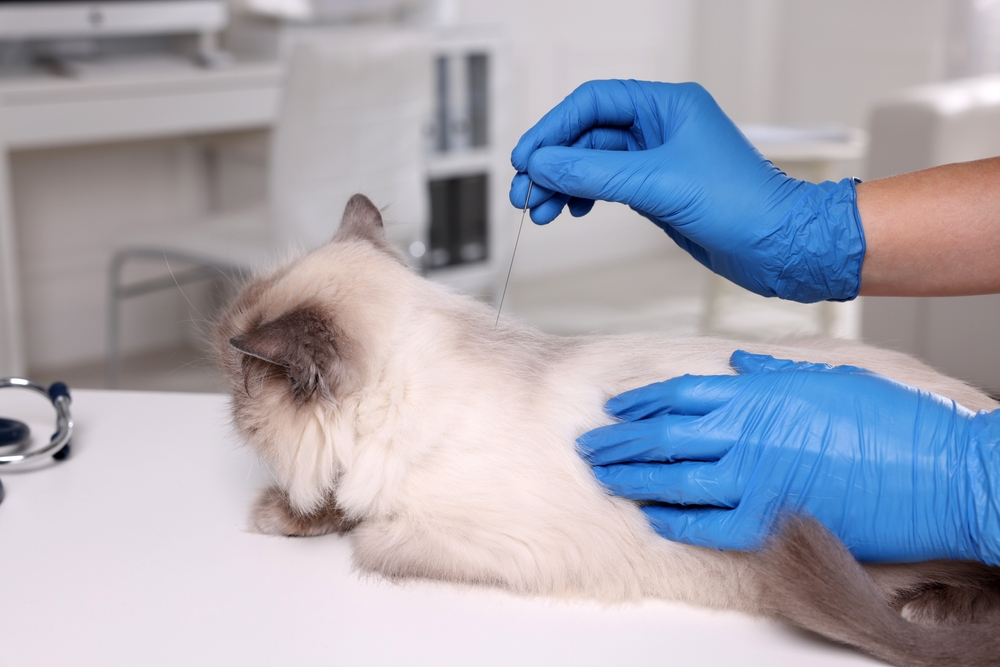
The rest is small stuff that adds up: steady routines, a stable weight, no unsupervised swimming, softer household sounds for a cat set off by sharp noises, and a soft landing spot where your dog likes to nap. Some families ask about acupuncture and other alternative therapies, and we’re glad to talk through what may support your pet’s comfort alongside their medication and what won’t take the place of it. Perfect control isn’t always the target; fewer, shorter, safer episodes usually is, and most pets get there.
Frequently Asked Questions About Seizures in Dogs and Cats
Can a Seizure Kill My Dog or Cat?
A single short seizure rarely does. The danger comes from duration and repetition: an episode that won’t stop, or several stacked close together, drives body temperature up and can injure the brain, kidneys, and muscles. The underlying cause carries its own risk too, which is why a seizure from a toxin, a heat event, or crashing blood sugar is treated as urgent no matter how brief it looked.
Will My Pet Be on Medication Forever?
Often, but not always. Pets with idiopathic epilepsy usually stay on daily medication for life, and stopping abruptly can trigger a severe seizure, so doses never get discontinued on a hunch. When a seizure traces to something correctable, like a toxin, low blood sugar in a puppy, or an electrolyte problem, treating the cause may be the entire treatment. We reassess at every recheck rather than assuming the first plan is the permanent one.
Is My Pet in Pain During a Seizure?
The seizure itself isn’t painful. Your pet is unconscious or deeply disconnected while it’s happening and has no memory of it afterward, even though the vocalizing sounds like distress. Pets can bruise a leg or bite their tongue, and the confusion that follows is genuinely uncomfortable for them. The fear in the room during those two minutes belongs almost entirely to you.
Getting Your Pet Comfortable Again After a Seizure
Watching a seizure is one of the worst few minutes a pet family can have, and it’s the helplessness people remember months later. Most pets shake off the fog and go back to being exactly who they were, and plenty of dogs and cats with epilepsy live long, ordinary, comfortable lives once the plan is dialed in.
Bring your log and your video, and let’s find out what’s behind it together. Whether the next question comes at noon or at three in the morning, reach out to Creature Comforts Veterinary Service in Saylorsburg and we’ll get your pet settled, examined, and resting somewhere quiet.






Leave A Comment