
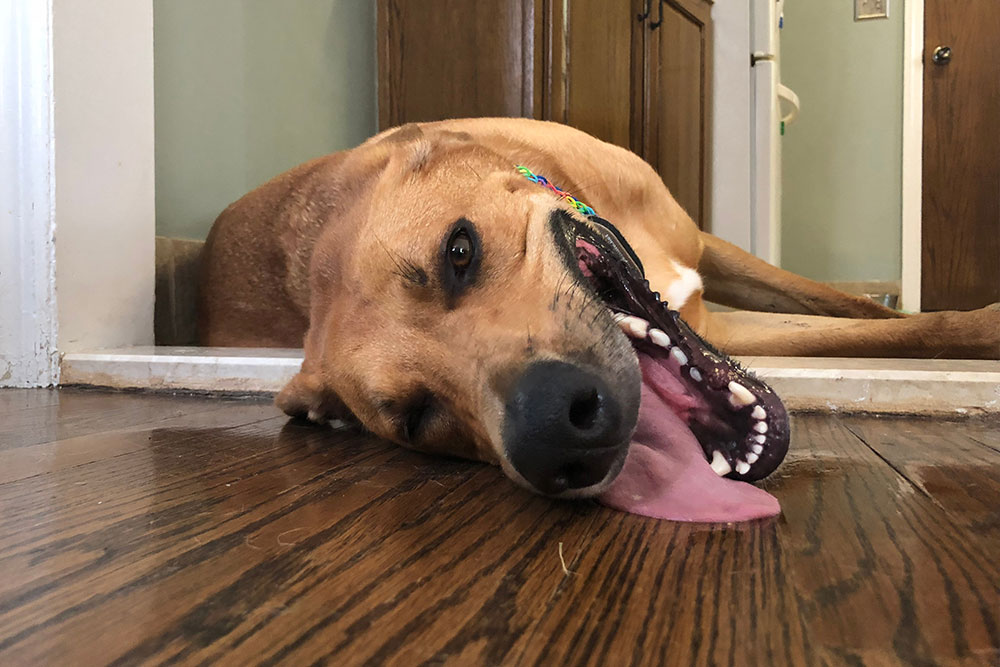
A pet who collapses after exercise should always be checked by a veterinarian, even if they pop right back up and seem fine a minute later. That collapse is your pet’s body telling you something could not keep up. Sometimes the cause is simple, like a dog who pushed too hard on a warm day and just needs to cool down and rest. Other times it points to something underneath, like an inherited genetic condition, low blood sugar, a heart rhythm problem, or an airway that cannot move enough air. From the outside these can look almost identical, so how fast your pet recovers, whether it happens again, and what else you notice all help us figure out what is really going on. Even a single episode that resolves on its own is worth looking into, because the next one might not.
At Creature Comforts Veterinary Service in Saylorsburg, we offer 24/7 emergency care, because collapse is exactly the kind of thing that does not wait for morning. If your pet goes down and does not bounce back, or recovers but leaves you wondering what happened, call ahead and come in. Our emergency services include full in-house diagnostics, ultrasound with cardiac evaluation, and surgery if we need it. For less urgent cases where you just want a thorough workup to rule things out, reach out to our team and we will set up the right kind of visit.
Exercise-Related Collapse at a Glance
- Any collapse deserves a look: even when your pet bounces right back, the collapse itself is the signal.
- The causes are many: inherited exercise-induced collapse, heart rhythm problems, fainting, low blood sugar, anemia, breathing trouble, and heatstroke.
- Heat and humidity make most of them worse: how fast your pet recovers and whether it keeps happening help guide the workup.
- Some pets tip over sooner: flat-faced breeds, seniors, and pets with known heart disease have a lower threshold.
What Does Exercise-Related Collapse Actually Mean?
Collapse means any episode where your pet suddenly loses strength, coordination, or consciousness during or right after activity. It is different from a tired dog flopping down to rest, since collapse is more abrupt and more dramatic. A few details help us sort out the cause, so it is worth paying attention to what you see:
- What the episode looked like: did it happen during exercise or right after stopping, how long did it last, and was your pet awake through it?
- How they recovered: back to normal in a minute, or confused and wobbly for a while afterward?
- Whether it repeats: a one-time thing, or a pattern, and only after exercise or also at rest?
- Anything else going on: coughing, hard panting, pale or bluish gums, or weakness in certain legs?
Those clues tend to point in different directions:
| Likely cause | What often tips us off |
| Inherited exercise-induced collapse | Young Lab, back legs go wobbly after 5 to 20 minutes of intense play |
| Heart rhythm problem or fainting | Fast collapse and fast recovery, no confusion afterward |
| Low blood sugar | Small or young dog, trembling, pale gums |
| Breathing problem | Noisy breathing, flat-faced breed or older large breed |
| Heatstroke | Hot or humid day, heavy panting, bright red gums |
| Anaphylaxis | Minutes after a sting or medication, swelling, vomiting |
Bring as much detail as you can, and if you can grab a quick phone video of an episode, that is genuinely gold. Our in-house diagnostics help us move fast from what you saw to real answers.
What Is Inherited Exercise-Induced Collapse?
Some dogs are born with a specific condition called Exercise-Induced Collapse, or EIC. It is most common in Labrador Retrievers but also turns up in Chesapeake Bay and Curly-Coated Retrievers, Boykin Spaniels, and German Wirehaired Pointers. These are usually healthy, high-energy, go-go-go dogs. After about 5 to 20 minutes of intense, excited activity like hard retrieving or ball-chasing, they start to wobble in the back end, move in a stumbling, uncoordinated way, and in bad episodes go down completely. Most recover fully within 15 to 30 minutes.
The cause is a Dynamin-1 mutation that affects nerve signaling during sustained intense effort, and a genetic test can confirm it or flag carriers for breeding decisions. Managing it is mostly about working around the trigger: shorter bursts of activity instead of long high-excitement sessions, breaks before your dog hits the wall, and stopping at the very first wobble.
What Heart Problems Can Cause Collapse?
Heart disease often shows up first as a dog who just cannot go as long anymore, a drop in exercise tolerance, well before anything dramatic happens. The conditions that limit safe exercise include rhythm problems (arrhythmias) that throw off blood flow during exertion, structural defects present from birth or developed later, cardiomyopathy, valve problems like mitral valve disease, and pulmonary hypertension, which is high pressure in the lungs’ blood vessels that makes the heart work harder and delivers less oxygen.
The tricky part is that the early signs are so easy to chalk up to age or arthritis: tiring quickly, not wanting to walk as far, lying down sooner, a cough after activity. That is exactly why a cardiac workup is worth doing, since it catches these early. Heat and humidity make heart signs dramatically worse, which is why summer often unmasks heart disease nobody knew was there.
Is It Fainting (Syncope) or a Seizure?
Syncope is just the medical word for fainting: a brief loss of consciousness when blood flow to the brain dips, often triggered by excitement, coughing, straining, or a sudden change in heart rate or blood pressure. The giveaway that separates it from a seizure is how your pet comes out of it. With fainting, they drop, go briefly limp, then stand up and act completely normal. With a seizure, they are usually confused, pacing, or wobbly for minutes to hours afterward. Because heart rhythm problems are a common cause of fainting, any episode deserves a look, often with an EKG and sometimes a Holter monitor worn at home to catch rhythm changes that come and go.
Can Low Blood Sugar or Anemia Be Behind It?
Sometimes the problem is fuel, not the heart or the airway. When muscles run short on sugar or oxygen, weakness and collapse can follow.
Low Blood Sugar (Hypoglycemia)
Low blood sugar causes weakness, disorientation, and collapse during or after exertion. It is most likely in small and toy breeds, puppies under four months, diabetic pets on insulin, hunting dogs going hard for long stretches, and pets with certain liver conditions or insulin-secreting tumors. Watch for wobbliness, trembling, confusion, pale gums, and in bad cases seizures. If you suspect it and your pet is awake enough to swallow, rubbing a little corn syrup or honey on the gums can buy you time, then come straight in, since severe or repeat episodes need care right away.
Anemia
Anemia means a low red blood cell count, which leaves less oxygen for the muscles and organs. An anemic pet tires fast, has pale gums, and may collapse during exercise. There are a lot of possible causes, from blood loss to immune-mediated destruction to certain infections, so bloodwork is how we pin down the reason and treat it.
What Breathing Problems Limit Exercise?
When a pet cannot move enough air, exercise gets risky, and breathing trouble during or after activity can come from a few places. Flat-faced breeds like Bulldogs, Pugs, Frenchies, and Persian cats have compressed airways that struggle to move air, especially in heat and humidity. Older dogs, particularly Labradors, can develop laryngeal paralysis, where the voice-box cartilages stop opening properly, causing noisy breathing and sometimes collapse. Small breeds can have tracheal collapse, with a chronic honking cough and low exercise tolerance, and various lung diseases reduce oxygen exchange. The tip-offs are noisy breathing, tiring far faster than age or fitness should explain, gagging or coughing during activity, and blue or pale gums. Many of these have good surgical and medical options.
How Does Heat Cause Collapse?
Heatstroke is a true emergency that can come on fast during exercise, especially when it is hot or humid. Flat-faced dogs, thick or double-coated breeds, overweight pets, and those with heart or breathing conditions are most at risk, and heatstroke can lead to collapse, seizures, organ failure, and death without quick treatment. If you suspect it:
- Get your pet to shade or air conditioning right away.
- Apply cool, not ice-cold, water to the belly, armpits, paw pads, and inner thighs.
- Keep air moving with a fan or open windows on the way in.
- Skip ice baths and towels draped on top, which can trap heat.
- Call ahead and head straight in.
Better yet, prevent it. Walk during the cooler parts of the day, bring water, watch for early signs like heavy panting that will not slow, bright red gums, and restlessness, and keep outings short when it is hot or sticky.
Can an Allergic Reaction Cause Collapse?
Sudden collapse can also be anaphylactic shock, a severe allergic reaction, usually from an insect sting, a medication, a vaccine, or rarely a food. It hits fast, often within minutes, with vomiting, diarrhea, weakness, pale gums, and trouble breathing in dogs, or sudden respiratory distress in cats. This one is a true emergency, so get to us immediately.
What Happens When We Work Up a Collapse?
When your pet comes in for a collapse, the workup usually starts with a detailed history of the episode and what led up to it, a full physical exam with a close listen to the heart and lungs, and bloodwork covering a blood count, organ values, blood sugar, and electrolytes. From there we often add chest X-rays to check heart size and the lungs, an EKG to read the heart’s rhythm, and an echocardiogram if we suspect a structural heart problem. Depending on what turns up, we might also reach for a Holter monitor, tick-borne disease testing, thyroid testing, or a neurological look. Our in-house lab and imaging let us get through most of this in a single visit.
When Is Collapse a Drop-Everything Emergency?
Get same-day or immediate care if:
- Your pet is unconscious and not coming around.
- There is difficulty breathing, or open-mouth breathing in a cat.
- Gums are blue or pale and do not pink back up quickly.
- There is significant bleeding from anywhere.
- You suspect heatstroke, a toxin, or an allergic reaction.
- There are several collapse episodes in a short span.
- Collapse happens in a pet already known to have heart disease.
And even when an episode resolves on its own, give us a same-day or next-day call so we can take a look before the next one.

How Can You Lower the Risk?
A few simple habits go a long way for vulnerable pets:
- Match the exercise to the pet, since flat-faced, senior, overweight, and heart patients need gentler routines than young athletes.
- Build up slowly, because sudden jumps in intensity are riskier than steady progress.
- Plan around the weather, walking early or late in summer and skipping the midday heat.
- Bring water for any outing over 15 minutes.
- Watch the warning signs, like heavy nonstop panting, a slowing pace, or glazed eyes, and call it a day early.
- Keep your pet at a healthy weight, which eases the load on the heart and lungs.
- Stay current on checkups, since wellness exams catch the heart, breathing, and metabolic issues that raise collapse risk.
Frequently Asked Questions About Pet Collapse
My Dog Collapsed Once After a Long Run but Seems Fine Now. Do I Really Need to Come In?
Yes, please come in. One episode that resolves does not rule out an underlying problem, it just means your pet got lucky this time. A workup tells us whether this was a one-off from overdoing it or something that will come back, and a lot of serious heart and metabolic conditions announce themselves with a single collapse before they get more frequent.
Can a Young, Healthy Dog Have Exercise-Induced Collapse?
Absolutely, especially in predisposed breeds. EIC typically hits young, fit, athletic Labradors and related breeds, and these dogs look perfectly normal right up until they cross the activity threshold that sets off an episode. A genetic test confirms it and helps shape how you manage their activity.
Should I Carry an EpiPen for My Dog With Allergies?
For a small group of pets with a confirmed history of severe anaphylaxis, prescription epinephrine auto-injectors can make sense, and we will talk through whether yours is one of them. For most allergic pets, knowing the early signs and getting to us quickly is the right plan.
When It Happens, Don’t Wait It Out
Even a brief collapse is information, your pet’s body flagging that something needs attention. The workup that follows turns that flag into an actual diagnosis and a plan to head off the next episode, whether that means adjusting your dog’s activity, starting heart medication, or rethinking summer walks. If your pet has collapsed, get in touch with our team and we will work out what happened together.





Leave A Comment