
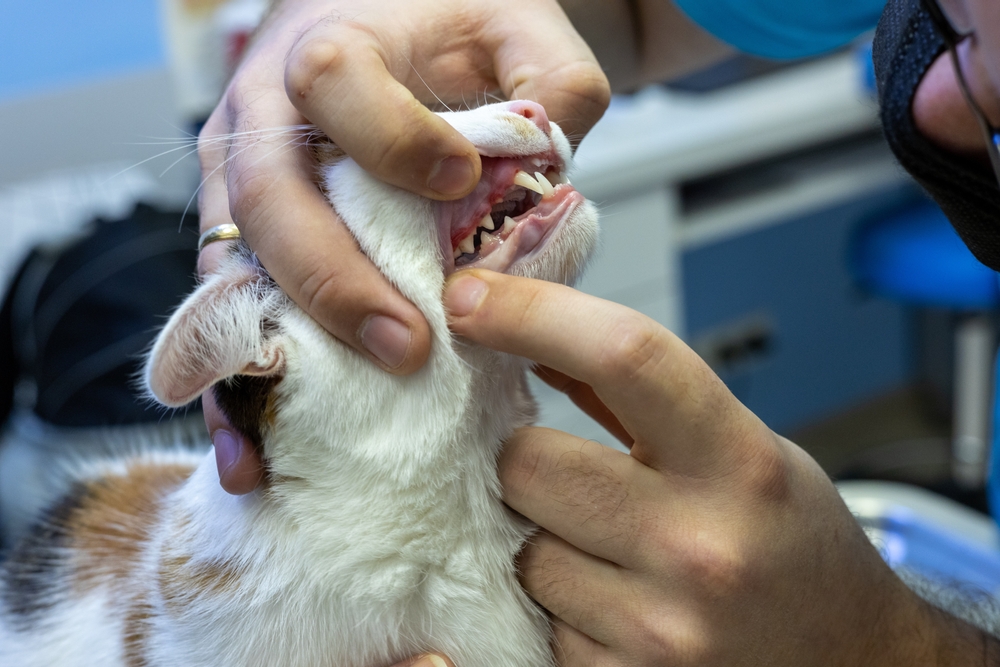
Feline chronic gingivostomatitis (FCGS) is one of the most painful conditions your cat can live with, and one of the most challenging to manage. It’s not a simple infection; it’s a complex, often immune-driven inflammatory response affecting the gums, the back of the mouth, and sometimes the throat, and it can render eating genuinely agonizing. Cats with FCGS often hide their pain so effectively that significant disease develops before you realize how much they’re suffering. By the time most cats are diagnosed, they’ve frequently been uncomfortable for far longer than they should have been.
Creature Comforts Veterinary Service in Saylorsburg is an AAHA-accredited, 24/7 practice with the surgical and diagnostic capabilities needed to manage advanced feline dental and oral conditions. Our dental and surgery services include full-mouth extraction, currently the most reliably curative treatment for FCGS, alongside pre- and post-surgical care designed to minimize stress and support recovery. Contact our team to discuss your cat’s oral health.
Key Facts
- Feline stomatitis is an exaggerated immune response to substances in the mouth, most commonly the bacterial biofilm on tooth surfaces, producing widespread inflammation that affects far more than just the gums.
- Medical management with anti-inflammatories, pain medication, and antibiotics can reduce inflammation temporarily but does not address the underlying immune trigger; effectiveness tends to decrease as the disease progresses.
- Full-mouth extraction (or extraction of all teeth caudal to the canines) is currently the most reliably curative approach, with 60 to 80 percent of cats experiencing substantial improvement or full resolution.
- Cats adapt remarkably well to life without teeth, and many eat with more enthusiasm after surgery than before because they’re no longer in constant pain.
What Is Feline Stomatitis and Why Is It So Painful?
Feline chronic gingivostomatitis is a condition where the immune system mounts an exaggerated inflammatory response to substances in the mouth that wouldn’t normally cause a problem. The trigger is most likely the bacterial biofilm that accumulates on tooth surfaces, but rather than a localized response to plaque, the immune system attacks the surrounding tissues with disproportionate intensity.
The inflammation is widespread. It affects not just the gums but the inner cheeks, the soft palate, the back of the throat, and the tissue surrounding the teeth at the gumline. The mucosa often appears bright red, ulcerated, and may bleed with even gentle contact. This is fundamentally different from standard periodontal disease, where inflammation is limited to the tooth-supporting structures.
The exact cause is not fully understood, which is part of why treatment must be individualized. Several factors are known to contribute, including chronic infection with feline calicivirus and feline herpesvirus, retained tooth roots from prior extractions, and underlying immune system dysfunction. Some cats with FeLV or FIV are particularly prone to stomatitis. Our diagnostics help identify the contributing factors so treatment can be targeted appropriately.
What Are the Signs of Stomatitis in Cats?
The signs of stomatitis are often subtle at first and develop gradually as inflammation worsens. Because cats hide oral pain so effectively, many families attribute early changes to fussiness or aging until the picture becomes impossible to ignore. The clinical exam typically reveals significantly more disease than the at-home behavior suggested.
What You May Notice at Home
Cats are skilled at concealing pain. By the time behavioral changes are obvious, the condition has usually been building for some time. Subtle signs to watch for:
- Reluctance to eat, especially dry food, or approaching the bowl and walking away
- Dropping food while attempting to chew
- Excessive drooling, sometimes blood-tinged
- Pawing at the mouth or face rubbing on furniture
- Favoring one side while chewing or moving food around the mouth
- Reduced grooming because the tongue movements are painful
- Bad breath that’s stronger than typical
- Weight loss as eating becomes more difficult
- Hiding or increased irritability, particularly around mealtime
- Vocalization while eating in some cats
These signs develop gradually. Many people attribute them to “normal aging” or pickiness, which delays diagnosis. Regular preventive exams help catch early mucosal changes before they progress, and our wellness and preventative care visits include thorough oral evaluation as a routine component.
What the Veterinary Team Looks For
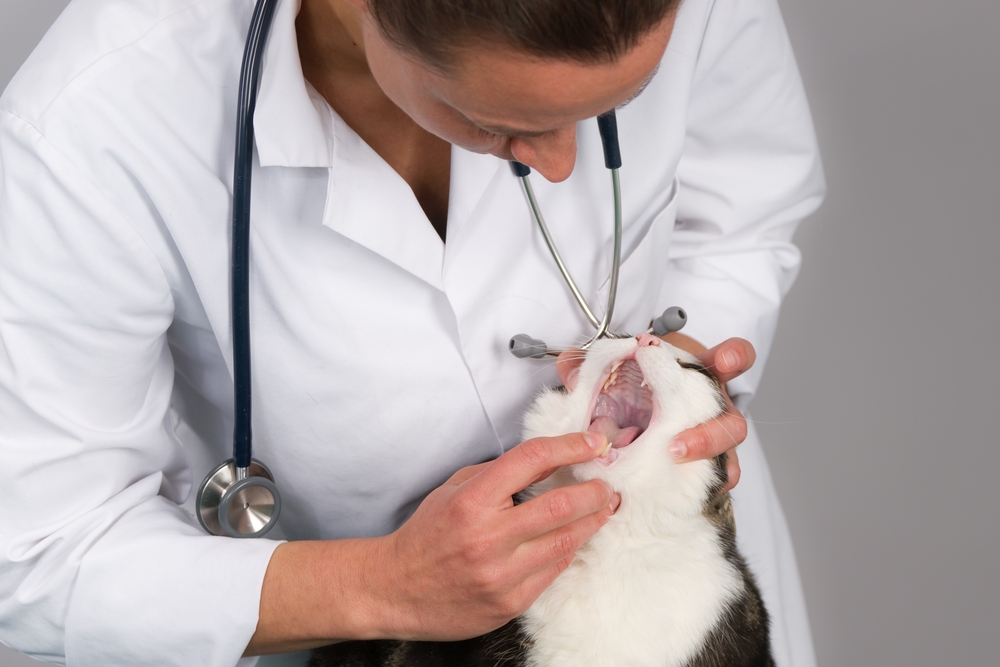
In a clinical exam for suspected stomatitis, the team typically finds significant inflammation, ulceration, and sometimes active bleeding of the oral mucosa. The pain level is typically severe enough that a complete oral exam cannot be performed safely or thoroughly without sedation or general anesthesia. Trying to fully assess these mouths in an awake cat causes unnecessary distress and produces incomplete information.
Under sedation, we can document the extent and pattern of inflammation, identify retained roots or hidden tooth fragments, take complete-mouth radiographs, and collect samples for cytology or biopsy if anything appears atypical.
How Does Stomatitis Differ From Periodontal Disease?
Stomatitis and periodontal disease often coexist in the same cat, but they are not the same condition. Stomatitis is an immune-driven inflammatory response that spreads throughout the mouth, while periodontal disease is the bacterial-driven destruction of structures supporting individual teeth. The distinction matters because routine dental cleaning resolves periodontal disease but barely touches stomatitis.
Periodontal disease targets the tooth-supporting structures: the gums, periodontal ligament, and bone around individual teeth. Stomatitis, by contrast, spreads throughout the entire oral cavity and does not respond to routine dental cleanings alone.
Many cats have both conditions simultaneously. The two often coexist and feed into each other, with periodontal disease providing the chronic bacterial stimulus that fuels the stomatitis inflammation. This is one reason dental radiographs are essential. They reveal:
- Hidden root pathology not visible above the gumline
- Retained tooth fragments from incomplete prior extractions
- Bone density changes around affected teeth
- The full extent of disease that needs to be addressed
When oral lesions appear unusual, asymmetric, or don’t fit the classic stomatitis pattern, oral cavity tumors must be ruled out. Squamous cell carcinoma in particular can mimic some inflammatory presentations. A tissue biopsy is the appropriate next step when there’s any concern.
How Is Feline Stomatitis Diagnosed?
Diagnosis combines clinical exam findings, viral testing, dental imaging, and biopsy when indicated. The workup usually requires sedation or general anesthesia because the mouths are too painful for a complete exam in an awake cat, and the dental radiographs that reveal hidden disease cannot be obtained any other way. A typical workup follows a logical sequence:
- Initial exam and history, including diet, medication response, and prior dental work
- Pre-anesthetic bloodwork to evaluate organ function and identify concurrent disease
- Viral testing for feline calicivirus, feline herpesvirus, FeLV, and FIV
- Sedated or anesthetized oral exam with a complete oral inspection and probing
- Full-mouth dental radiographs to identify hidden pathology
- Biopsy if any lesion appears atypical
- Documentation of the extent and severity to guide treatment planning
Viral status directly shapes care. Cats with active calicivirus involvement often have more severe disease and may benefit from antiviral or immunomodulatory therapy alongside surgical intervention. FeLV and FIV positive cats need additional management considerations both perioperatively and long-term.
What Are the Treatment Options for Feline Stomatitis?
Treatment ranges from medical management for early or mild disease to full-mouth extraction for established cases, with emerging therapies available for cats who don’t fully respond to surgery. The honest reality is that medical management works best as a bridge to definitive treatment, and the longer surgery is delayed, the harder the case typically becomes to fully resolve.
Medical Management and Its Limitations
Medical management has a role, but it’s important to understand what it can and cannot do. Treatments commonly used include:
- Anti-inflammatory medications, including corticosteroids and cyclosporine
- Antibiotics during acute flares (effective only for bacterial infection components, not the underlying immune problem)
- Pain medications, including buprenorphine and gabapentin
- Antiviral medications in cats with confirmed calicivirus involvement
- Soft food to make eating less painful
- A temporary feeding tube in severe cases where oral intake has become impossible
The honest reality of medical management:
- It can reduce inflammation temporarily but doesn’t address the underlying immune trigger
- Effectiveness tends to decrease over time as the disease progresses
- Long-term steroid use carries real risks (diabetes, immunosuppression, weight gain) and may reduce the chances of a good surgical outcome later
- It’s a bridge to definitive treatment, not a substitute for it
For those hoping to manage with medication alone, we have honest conversations about expected trajectory. Most cats reach a point where medication becomes inadequate, and the longer surgery is delayed, the more challenging the case often becomes. For cats who suddenly stop eating entirely or show signs of severe distress, our emergency care is available around the clock; complete inability to eat warrants prompt evaluation rather than waiting.
Full-Mouth Extraction as the Primary Treatment
The rationale behind full-mouth tooth extraction is straightforward: removing the plaque-retaining tooth surfaces eliminates the primary trigger driving the immune response. Without teeth as a substrate for bacterial biofilm, the immune system has nothing to react against.
Outcomes from this approach are striking. Studies show 60 to 80 percent of cats experience substantial improvement or full resolution after complete extraction. The best outcomes happen in cats treated earlier, before chronic inflammation has caused tissue changes and before long-term medication has compromised the immune response.
A successful outcome depends on several technical details:
- Removing all root material is critical. Retained root fragments continue driving inflammation indefinitely.
- Post-operative radiographs confirm completeness before recovery
- Local nerve blocks provide intra-operative pain control and reduce systemic anesthesia requirements
- Therapeutic laser application post-extraction reduces inflammation and supports tissue healing
The procedure typically removes either all teeth (full-mouth extraction) or all teeth caudal to the canines (caudal extraction), depending on disease distribution. Some cats do well with caudal extraction; others need full extraction to fully resolve.
Advanced Treatment Options for Refractory Cases
For the 20 to 40 percent of cats who don’t fully respond to surgical treatment, several emerging approaches are available:
- Adipose-derived mesenchymal stem cell therapy uses your cat’s own fat-derived stem cells (or those from a donor) to modulate the immune response. Early studies show meaningful improvement in some cats with non-responsive stomatitis. The therapy typically involves multiple intravenous infusions over a defined treatment course.
- MSC secretome therapy uses the bioactive molecules secreted by stem cells without using the cells themselves. It’s a newer but promising approach with a growing body of supporting research.
- Cryotherapy to affected mucosal surfaces can range from temporary symptom relief to lasting resolution in selected cases.
- Advanced antiviral and immunomodulatory combinations may help cats with refractory disease and persistent calicivirus involvement. These approaches require careful monitoring and individualized adjustment.
What Does Recovery Look Like After Full-Mouth Extraction?
The most common concern is how your cat will manage without teeth. The honest answer is that cats adapt remarkably well, and many eat with more enthusiasm than before because they’re no longer in constant pain.
The post-operative period typically includes:
- Several days of recovery at home with strict rest
- Pain medication for 7 to 14 days, often longer
- Antibiotics during initial healing
- Soft food during the healing phase, transitioning back to regular textures over weeks
- Recheck appointments to monitor surgical sites and adjust medications
- Continued supportive care for cats with calicivirus carrier status who may need ongoing immunomodulatory therapy
Most cats are eating soft food within 24 to 48 hours and showing significant comfort improvements within the first week. Full mucosal healing typically takes 4 to 6 weeks, and improvements in chronic inflammation can continue for months as the immune response calms down.
Cats without teeth often handle dry food just fine over time- honestly, many cats swallow without chewing even with teeth. There’s no requirement for permanently soft food once healing is complete, though some cats prefer it and it is good for their long-term kidney and urinary health.
What Is the Long-Term Prognosis for Cats With Stomatitis?
Several factors shape long-term outcomes:
- Duration of disease before treatment: earlier intervention produces better results
- Completeness of extraction: retained roots reliably cause persistent disease
- Viral carrier status: calicivirus-positive cats often need longer post-operative management
- Individual immune response: some cats simply respond better than others
- Concurrent diseases: FeLV, FIV, or systemic illness can complicate recovery
For the majority of cats, the prognosis after full-mouth extraction is excellent. Many cats are essentially cured, with no further oral pain or inflammation for the rest of their lives. Cats who need ongoing medication after surgery typically still experience a significant reduction in pain and inflammation, returning to normal daily behavior even if they’re not fully off all medications.
Outcomes are best when families act early, commit to comprehensive treatment, and follow through with post-operative care. Stomatitis is one of the conditions where waiting genuinely makes things worse.
How Do You Maintain Oral Health in Cats Without Stomatitis?
Consistent at-home care and professional dental health maintenance prevent the kind of significant dental disease that contributes to oral inflammation in cats. While stomatitis is fundamentally an immune response and not purely caused by inadequate dental care, healthy oral hygiene reduces the bacterial load that triggers immune dysfunction in susceptible cats.
Our online pharmacy has a range of cat dental products to try, though for most cats with stomatitis, dental care alone isn’t enough. Annual professional dental cleanings with full-mouth radiographs are recommended for most cats. Some cats need more frequent intervention; others can stretch longer between cleanings. We tailor recommendations to the individual cat at every wellness visit.
Frequently Asked Questions About Feline Stomatitis
Will my cat starve if all their teeth are removed?
No. Cats adapt very quickly to life without teeth and eat well, often more enthusiastically than before because they’re no longer in pain. They can manage soft food and, over time, most can handle dry food too.
Can stomatitis be prevented?
Not reliably. Because the underlying cause involves immune dysfunction and viral factors, prevention isn’t fully possible. However, consistent dental care and prompt treatment of dental issues reduce risk and catch developing problems earlier.
Why didn’t my cat’s previous dental cleaning fix the stomatitis?
Stomatitis doesn’t respond to routine cleaning because the trigger isn’t just plaque on tooth surfaces. The immune system reacts to teeth themselves once disease is established, which is why removing the teeth is the curative approach.
Is the surgery dangerous?
Full-mouth extraction is a significant procedure but is performed safely as a routine matter at our AAHA-accredited practice. Pre-anesthetic bloodwork, comprehensive monitoring, multimodal pain management, and skilled surgical technique all make the procedure safer than most people assume.
What if I can’t afford full-mouth extraction right now?
Talk with us. There are payment plan options, and the long-term cost of medical management often exceeds the cost of definitive treatment. We can also help prioritize the most urgent extractions if a phased approach makes financial sense.
Getting Your Cat the Help They Need
Watching your cat in oral pain is genuinely difficult, and stomatitis is one of the more painful conditions cats face. Outcomes are consistently better when families act early, accept that surgery is usually the right answer, and commit to the post-operative care that produces lasting results. The condition is serious, but it’s also treatable. Most cats who undergo full-mouth extraction have dramatically better quality of life within weeks.
If you’re seeing signs that worry you, or if your cat has been managed medically for stomatitis without sustained improvement, our team is ready to help. Schedule an appointment, ask questions about diagnostics or treatment options, or bring your cat in for a thorough oral evaluation. Your cat doesn’t have to keep living in pain.





Leave A Comment